Movement Insights
Analytical overviews and conceptual explorations of specific movement phenomena, presented for general educational purposes. These are not recommendations or guidance.
Systematic Observations on Movement Patterns
The insights presented in this section represent systematic observations drawn from movement science literature. Each entry examines a specific aspect of human movement from a descriptive, analytical perspective — how things are, not what individuals should do about them.
These overviews are intended to build conceptual fluency: the ability to understand and discuss movement phenomena with accuracy and appropriate nuance.
Understanding Gait Patterns
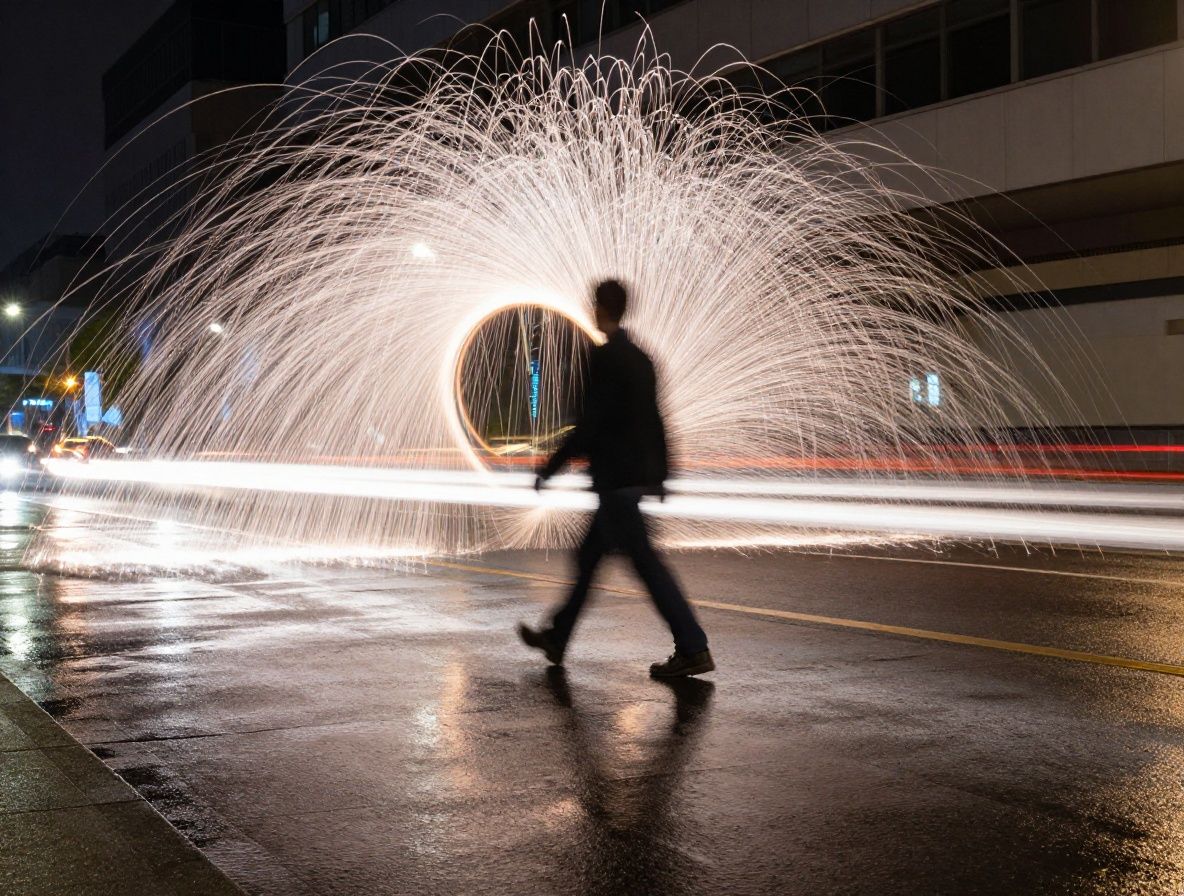
Gait — the pattern of limb movement that produces locomotion — is one of the most extensively studied subjects in biomechanics. Human walking and running represent distinct movement patterns with different mechanical characteristics, energy demands and sensorimotor control requirements.
A single walking cycle (gait cycle) spans the interval from initial contact of one foot with the ground to the next initial contact of the same foot. Within this cycle, the body transitions repeatedly through phases of double support (both feet on the ground) and single support (one foot bearing full body weight).
Key variables that researchers examine when characterising gait patterns include:
- Cadence: The number of steps taken per unit time
- Step and stride length: The spatial parameters of each footfall
- Ground reaction forces: The forces transmitted through the foot to the supporting surface
- Centre of mass trajectory: The arc described by the body's centre of mass through space
- Temporal symmetry: Whether left and right sides of the body contribute equally to propulsion and braking
Individual gait patterns vary considerably between people and are influenced by numerous factors including leg length, footwear, terrain, walking speed and accumulated movement history. Research consistently demonstrates that there is no single "normal" gait; rather, there is a distribution of patterns that represent functional adaptation to individual parameters.
Gait Cycle: Sequential Pattern
The Mechanics of Postural Balance
Postural balance refers to the ability of the body to maintain its centre of mass within its base of support, whether at rest (static balance) or during movement (dynamic balance). Both forms require the continuous integration of sensory information and the generation of appropriate corrective motor responses.
Three sensory systems contribute to postural balance:
Visual System
Provides information about the position and movement of the body relative to the environment
Vestibular System
Detects head acceleration and gravitational orientation through structures in the inner ear
Somatosensory
Provides information about body position and contact forces through receptors in muscles, tendons and skin
When these three systems provide consistent information, the postural control system operates with a substantial margin of redundancy. When one system is compromised or provides conflicting information, the central nervous system must reweight its reliance on the remaining sources — a process that has been extensively studied in both research and applied contexts.
Balance is not a passive state but an active one, requiring constant micro-corrections. Even in apparently still standing, the body's centre of mass oscillates continuously, and the postural muscles respond continuously to prevent displacement beyond the functional base of support.
Research note: Studies using force plates have demonstrated that this continuous postural sway is not random noise but follows structured, quasi-periodic patterns. The characteristics of these patterns are analysed as indicators of postural system function in research contexts.
Adaptation in Human Locomotion
One of the most remarkable properties of the human locomotor system is its capacity for adaptation — the ability to adjust movement strategies in response to changing environmental conditions, novel demands, and altered body configurations. This adaptability is a product of both the mechanical properties of the musculoskeletal system and the neurological mechanisms governing motor learning.
Short-term locomotor adaptation occurs rapidly, often within a few steps of encountering a new surface texture, incline, or obstacle. The nervous system uses predictive models — internal representations of expected mechanical consequences of movement — to pre-adjust motor commands before sensory feedback confirms the outcome.
When these predictions are violated — when the ground is unexpectedly slippery, or a step is higher than anticipated — a rapid reactive correction is generated, drawing on the same sensory systems that support postural balance.
Long-term locomotor adaptation occurs through the mechanisms of motor learning and structural adaptation of the musculoskeletal system. Repeated exposure to novel movement demands modifies both the neural programmes governing movement and, over time, the physical characteristics of the structures bearing mechanical load.
This dual process — rapid neurological adjustment and slower structural adaptation — means that the human movement system operates across multiple timescales simultaneously, maintaining both short-term responsiveness and long-term functional optimisation.
Adaptation: Timescale Model
Comparative Perspectives on Movement Approaches
Movement science literature describes several broad frameworks for understanding how humans organise and develop movement skills. Each reflects different assumptions about the primary drivers of movement quality.
Ecological Approach
Emphasises the relationship between the mover and their environment. Movement patterns are seen as emerging from the interaction between the individual's physical capacities, the task demands, and the specific environmental context rather than from a single internally-stored motor programme.
Neuroscientific Framework
Focuses on how the central nervous system generates, stores and retrieves motor patterns. Research in this tradition examines neural correlates of movement planning, the role of sensory feedback in real-time movement control, and the mechanisms by which practice alters neural organisation.
Mechanical Systems View
Treats the body as a mechanical system of linked segments, applying principles of classical mechanics to describe and predict movement outcomes. This framework underlies computational modelling approaches and provides the quantitative tools for analysing ground reaction forces, joint torques and segment accelerations.
Context & Limitations
The insights presented on this page are derived from published research literature and represent descriptions of how phenomena have been studied and characterised in academic contexts. No individual guidance is provided or implied. These overviews are intended purely for educational and informational purposes.
This content does not represent clinical assessment, individual evaluation, or advice of any kind. Readers are encouraged to consult qualified professionals regarding any personal circumstances or decisions.